
Choosing the right seo tools rank tracker can make a significant difference to your website’s search visibility, reporting accuracy and long-term SEO performance. Whether you manage multiple client websites or operate a small business, monitoring keyword positions helps you understand whether your SEO strategy is producing results.
However, not every ranking tool offers the same features. Some platforms provide complete SEO suites with keyword research, competitor analysis and website audits. Others specialise in accurate daily ranking updates, local search visibility and automated agency reports.
The best seo tools rank tracker should help you monitor important keywords, identify ranking changes, compare competitors and make informed optimisation decisions without wasting your budget.
In this guide, we compare seven popular tools, explain their strengths and limitations, and help you choose the right solution for your business.
What Is an SEO Rank Tracker?
An SEO rank tracker is a software tool that monitors where your website appears in search engine results for selected keywords.
For example, if your business targets the keyword “digital marketing agency in London”, a rank tracker can show whether your website appears in position 5, position 12 or outside the top 100 results.
Most modern SEO ranking tools can monitor:
- Google keyword positions.
- Desktop and mobile rankings.
- Local and location-specific search results.
- Competitor keyword positions.
- Ranking improvements and declines.
- SERP features, including featured snippets.
- Search visibility trends over time.
An effective tracking system helps agencies demonstrate campaign progress and enables small businesses to identify opportunities before competitors take advantage of them.
7 Best SEO Tools Rank Tracker Options in 2026
Here are seven useful platforms to consider, depending on your budget, reporting requirements and SEO objectives.
1. SE Ranking
Best for: Small businesses, growing agencies and value-conscious SEO teams.
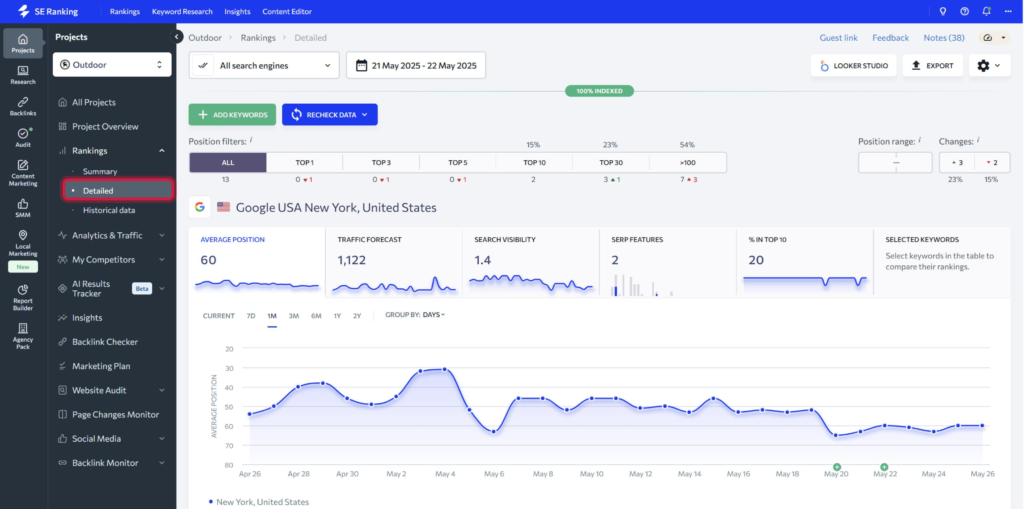
SE Ranking is a popular SEO platform offering keyword position tracking alongside keyword research, website auditing, backlink monitoring and competitor analysis.
Its position-tracking functionality allows users to monitor keyword performance across different search engines, devices and geographical locations.
Key features:
- Daily keyword position monitoring.
- Local and geographical rank tracking.
- Competitor position comparisons.
- Automated SEO reporting.
- Website auditing and keyword research.
- White-label reporting options.
Advantages: A broad SEO toolkit, useful reporting features and scalable keyword tracking.
Limitations: Advanced features and additional tracking requirements can increase subscription costs.
Verdict: A strong all-round choice for agencies and small businesses that want several SEO capabilities in one subscription.
2. Semrush
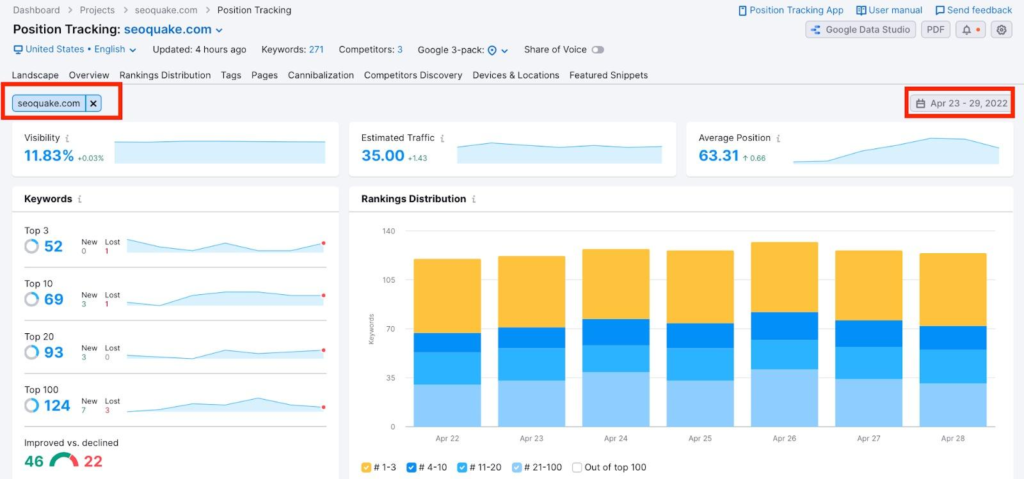
Best for: Agencies managing multiple SEO campaigns.
Semrush offers Position Tracking as part of its wider digital marketing platform. It helps SEO professionals monitor keyword rankings, competitor visibility and search engine performance.
Agencies can use its reporting capabilities to understand ranking movements and communicate campaign progress to clients.
Key features:
- Daily keyword position tracking.
- Competitor domain monitoring.
- Local and national tracking.
- SERP feature monitoring.
- Keyword research and backlink analysis.
- Customisable reports.
Advantages: Comprehensive SEO research, competitor analysis and campaign management.
Limitations: Subscription costs can become significant for smaller businesses, especially when additional users and features are required.
Verdict: A powerful option for agencies that need more than basic keyword tracking.
3. Ahrefs
Best for: SEO professionals focused on backlinks and competitor research.
Ahrefs combines keyword tracking with a strong backlink analysis and organic search research toolkit.
Its Rank Tracker helps users monitor keyword positions, compare competing websites and understand changes in organic search visibility.
Key features:
- Keyword ranking reports.
- Competitor visibility comparisons.
- Historical ranking data.
- Backlink analysis.
- Organic keyword research.
- SERP performance monitoring.
Advantages: Particularly useful for backlink research and competitive SEO analysis.
Limitations: Rank-tracking update frequency depends on the subscription and is generally less frequent than dedicated daily trackers on some plans.
Verdict: A sensible choice for agencies already using Ahrefs for backlink and keyword research.
4. AccuRanker
Best for: Large agencies and businesses requiring frequent ranking updates.
AccuRanker specialises in keyword rank tracking rather than trying to provide every SEO function in one platform.
It is designed for teams managing substantial keyword portfolios and requiring detailed ranking reports.
Key features:
- Daily and on-demand ranking updates.
- Competitor tracking.
- Keyword segmentation and tagging.
- Local and mobile rank monitoring.
- Reporting and integrations.
- Agency-oriented workflows.
Advantages: Specialised tracking capabilities and efficient reporting for larger campaigns.
Limitations: Businesses may need additional tools for technical SEO, backlink research and content optimisation.
Verdict: Worth considering when keyword monitoring is a central part of your agency’s workflow.
5. Nightwatch
Best for: Local SEO agencies and multi-location businesses.
Nightwatch is particularly useful for monitoring search rankings across different geographical locations.
This makes it relevant for companies targeting specific cities, neighbourhoods or service areas.
Key features:
- Local keyword tracking.
- Daily ranking updates.
- Competitor monitoring.
- SEO reporting.
- Search visibility analysis.
- Google Maps and local search monitoring capabilities.
Advantages: Useful location-based tracking and agency reporting.
Limitations: Its feature set may not replace a complete SEO research platform.
Verdict: A good option for businesses where local search visibility is an important source of customers.
6. Wincher
Best for: Freelancers, startups and smaller businesses.
Wincher provides a relatively straightforward way to monitor keyword positions without the complexity of larger SEO platforms.
Its interface is designed around tracking keyword performance and understanding changes in search rankings.
Key features:
- Keyword position monitoring.
- Competitor comparisons.
- Ranking history.
- SEO performance reporting.
- Keyword suggestions.
- Website-level tracking.
Advantages: Straightforward interface and accessible tracking workflows.
Limitations: Fewer advanced research capabilities than comprehensive SEO suites.
Verdict: A practical starting point for smaller websites that primarily need keyword monitoring.
7. Google Search Console
Best for: Every website owner, including businesses with limited budgets.
Google Search Console is an essential free resource for understanding how a website performs in Google Search.
Its Performance report provides impressions, clicks, click-through rate and average position for search queries and pages.
Key features:
- Search query performance.
- Average ranking position.
- Organic clicks and impressions.
- Page-level performance.
- Indexing and search appearance reports.
- Mobile usability and Core Web Vitals information.
Advantages: Free access to first-party Google Search performance data.
Limitations: It is not a dedicated competitor rank tracker. Its average position is calculated across impressions and may differ from the ranking a person sees in an individual search.
Verdict: An essential foundation for SEO reporting, but it works best alongside a dedicated rank-tracking platform.
SEO Rank Tracker Tools Comparison Table
| Tool | Best suited for | Main strength |
|---|---|---|
| SE Ranking | Small agencies | All-round SEO tracking |
| Semrush | Established agencies | Complete SEO research |
| Ahrefs | SEO professionals | Backlink and competitor research |
| AccuRanker | Large agencies | Dedicated rank tracking |
| Nightwatch | Local businesses | Location-based rankings |
| Wincher | Small websites | Simple keyword monitoring |
| Google Search Console | All website owners | Free Google performance data |
Pricing and keyword limits vary by subscription, billing frequency, location and add-ons. Check the official pricing pages before purchasing.
How to Choose the Right SEO Rank Tracker for Your Business
Selecting the right seo tools rank tracker depends on the size of your website, your target market and the number of keywords you need to monitor.
Before purchasing a subscription, consider these important factors.
1. Keyword Tracking Capacity
Check how many keywords the platform allows you to monitor. A freelancer managing one website may need only 100–200 keywords, whereas an agency managing 20 clients could require thousands.
Choose a plan that accommodates future growth without unnecessary expenses.
2. Ranking Update Frequency
Some tools update keyword positions daily, while others provide weekly or less frequent updates.
Daily tracking is useful for competitive industries, recently published content and campaigns involving frequent optimisation changes.
Weekly tracking may be sufficient for smaller websites with relatively stable rankings.
3. Local SEO Tracking
Businesses targeting specific locations should prioritise geographical tracking.
For example, a company serving Karachi may want to monitor rankings for:
- SEO agency in Karachi.
- Digital marketing services in Clifton.
- SEO services in Gulshan-e-Iqbal.
- Local SEO company in Karachi.
A reliable seo tools rank tracker should allow you to monitor the locations that actually matter to your customers.
For businesses targeting different regions, explore BoostRankify’s local SEO services in Pakistan, UK SEO services and USA SEO services.
4. Competitor Analysis
A good rank tracker should show how your website performs compared with competing domains.
Look for features that identify:
- Competitor keyword rankings.
- Keywords competitors rank for but you do not.
- Ranking improvements and declines.
- Search visibility opportunities.
- Changes in competing landing pages.
This information helps agencies develop more effective SEO strategies instead of relying on ranking reports alone.
5. Automated Reporting
Reporting is particularly important for SEO agencies.
Look for software that provides:
- Customisable reports.
- White-label branding.
- Scheduled report delivery.
- Client-specific dashboards.
- Historical ranking comparisons.
These features reduce manual reporting work and help clients understand campaign progress.
6. AI Search Visibility
Traditional Google rankings are no longer the only visibility metric worth monitoring.
Businesses are increasingly interested in how their brands appear in AI-generated answers and conversational search experiences.
When evaluating modern seo tools rank tracker platforms, consider whether they offer additional monitoring for AI Overviews, ChatGPT Search, Perplexity and other AI-powered discovery experiences.
Remember that AI visibility tracking is different from traditional keyword ranking. A platform should explain what it measures rather than presenting an AI visibility score as a guaranteed measure of traffic or conversions.
For businesses exploring this area, BoostRankify’s AI SEO services provide a relevant starting point.
Free vs Paid SEO Rank Tracker Tools: Which Should You Choose?
Both free and paid tools have a place in an effective SEO strategy.
| Requirement | Free tools | Paid tools |
|---|---|---|
| Basic Google performance | Yes | Yes |
| Competitor rankings | Limited | Advanced |
| Daily keyword monitoring | Limited | Usually available |
| Local tracking | Limited | More detailed |
| Automated client reports | Limited | Usually available |
| Historical comparisons | Available in selected reports | More flexible |
| Agency management | Limited | Better suited |
Google Search Console is an excellent starting point because it provides actual Google Search performance data.
However, businesses managing several websites or competing across multiple locations may benefit from paid tracking platforms.
The best approach is to start with free data and invest in paid seo tools rank tracker software when the additional insights justify the cost.
How Agencies Can Use Rank Tracking to Improve Client Results
SEO agencies should treat ranking data as part of a wider performance measurement system.
A ranking improvement does not automatically mean a business is generating more revenue. Agencies should connect keyword performance with traffic, engagement and conversions.
Here is a practical workflow:
- Create a keyword list: Identify the primary and secondary keywords for each client.
- Assign target pages: Connect each keyword to the most relevant landing page.
- Configure locations: Track rankings in the cities or countries where clients operate.
- Monitor competitors: Compare keyword positions against relevant competing websites.
- Review changes: Investigate significant ranking increases and declines.
- Measure organic traffic: Compare tracking data with Google Search Console and analytics.
- Prepare reports: Explain what improved, what declined and what needs attention.
For example, an agency working with a SaaS company can monitor commercial keywords, informational queries and competitor comparisons separately.
Similarly, companies in competitive industries can benefit from dedicated SEO strategies. Explore SEO for SaaS businesses, SEO for financial advisors and SEO for construction companies.
Common SEO Rank Tracking Mistakes to Avoid
Even the best tracking platform cannot produce meaningful results if campaigns are configured incorrectly.
Avoid these common mistakes:
Tracking too many irrelevant keywords: Focus on search terms that match your products, services and audience.
Ignoring search intent: A keyword may attract visitors without generating qualified leads.
Checking rankings without analysing traffic: Position improvements should be evaluated alongside clicks, impressions and conversions.
Ignoring geographical differences: Rankings can vary between cities, regions and countries.
Changing strategies too frequently: A temporary ranking fluctuation does not always require immediate action.
Relying on one metric: Combine ranking data with organic traffic, engagement, leads and sales.
A properly configured seo tools rank tracker helps businesses avoid these mistakes by providing consistent information for better decisions.
Why BoostRankify Recommends a Data-Driven SEO Strategy
At BoostRankify, effective SEO is about more than achieving higher keyword positions. Sustainable organic growth requires technical optimisation, relevant content, keyword research, authority building and continuous performance monitoring.
Our SEO services are designed to support businesses targeting different markets and industries.
Whether you operate a small local business, manage an international company or run an agency, selecting the right tracking software can help you understand campaign performance and identify opportunities for improvement.
You can also explore our guest post services and free business listing sites resources to learn more about supporting your wider SEO strategy.
Frequently Asked Questions
1. What are the best SEO rank tracker tools in 2026?
SE Ranking, Semrush, Ahrefs, AccuRanker, Nightwatch, Wincher and Google Search Console are useful options. The right choice depends on your keyword volume, budget, reporting requirements and tracking frequency.
2. What is the best free SEO rank tracker?
Google Search Console is one of the best free options for monitoring Google Search performance. It provides clicks, impressions, average position and query-level information. However, it does not replace a dedicated competitor rank tracker.
3. Which rank tracker is best for SEO agencies?
SE Ranking and Semrush are strong all-round choices. AccuRanker is worth considering for agencies requiring specialised keyword monitoring and frequent updates. Nightwatch is useful for location-focused campaigns.
4. How often should I check keyword rankings?
Daily tracking is useful for competitive campaigns and active optimisation projects. Weekly reviews may be sufficient for smaller or more stable websites. Monthly reporting helps evaluate longer-term performance.
5. Can SEO rank trackers monitor local keyword positions?
Yes. Several paid platforms support location-specific tracking, allowing businesses to monitor keyword rankings across different cities, regions and countries. This is particularly useful for local service providers.
6. Are keyword rank trackers accurate?
They provide useful estimates of search visibility, but results can vary depending on location, device, search settings and tracking methodology. Compare ranking data with Google Search Console rather than treating one position as universal.
7. Do SEO rank trackers monitor AI search visibility?
Some modern platforms offer additional AI search visibility features. However, traditional Google keyword positions and AI-generated brand mentions are different measurements and should be reported separately.
8. How much do SEO rank tracker tools cost?
Costs depend on the provider, subscription level, keyword limits, update frequency and additional features. Free options are available, while professional agency platforms can cost considerably more. Always compare the actual limits of each subscription before purchasing.
Conclusion: Choose the Best SEO Rank Tracker for Sustainable Growth
Choosing the right seo tools rank tracker can help agencies and small businesses make smarter SEO decisions, monitor keyword performance and identify opportunities to improve organic visibility. Tools such as SE Ranking, Semrush, Ahrefs, AccuRanker, Nightwatch and Wincher offer different tracking capabilities, while Google Search Console provides valuable free performance insights.
The best platform ultimately depends on your budget, keyword requirements, target locations and reporting needs. Small businesses can start with affordable tracking solutions, while agencies managing multiple clients may benefit from advanced competitor analysis, local tracking and automated reporting.