
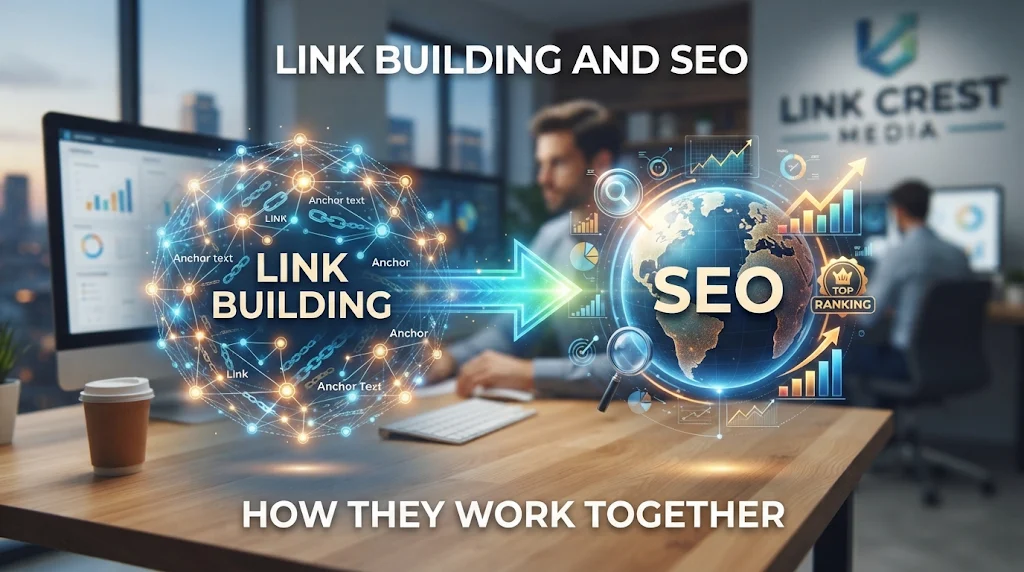
In a competitive digital landscape, getting your website noticed on Google requires more than publishing content and adding keywords. Link building and SEO work together to help search engines understand your website’s relevance, credibility, authority, and value to users. While SEO improves the overall quality and visibility of your website, link building helps strengthen its reputation through links from other websites.
Businesses that combine link building and SEO can create a stronger foundation for sustainable organic growth. Quality backlinks can help search engines discover pages, understand their importance, and evaluate how trustworthy a website may be. Meanwhile, effective on-page SEO, technical optimisation, and useful content ensure visitors have a positive experience after arriving.
Whether you’re a local business, an online store, a startup, or an established brand, understanding how link building and SEO complement one another can help you build a more successful search strategy.
What Is Link Building?
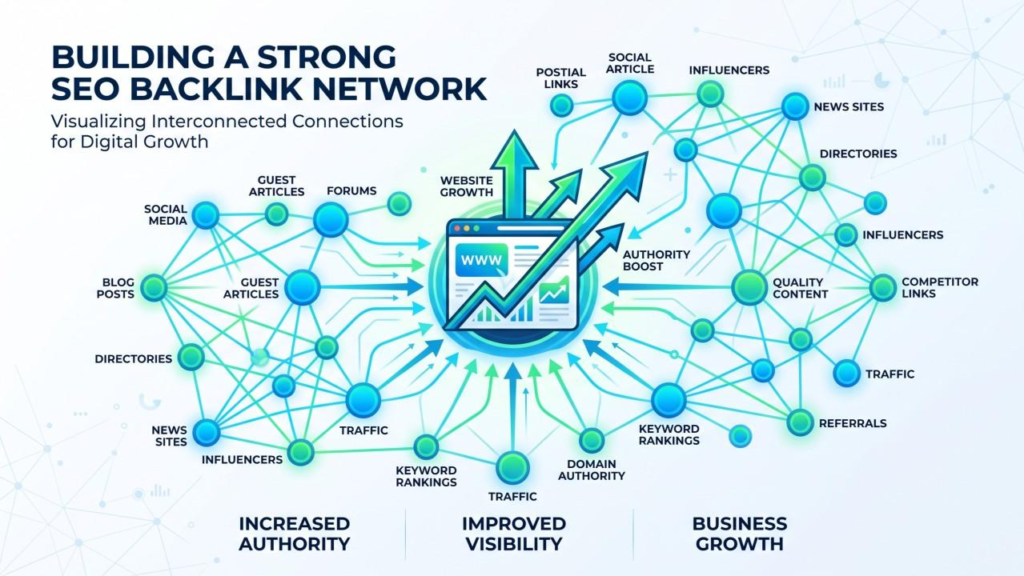
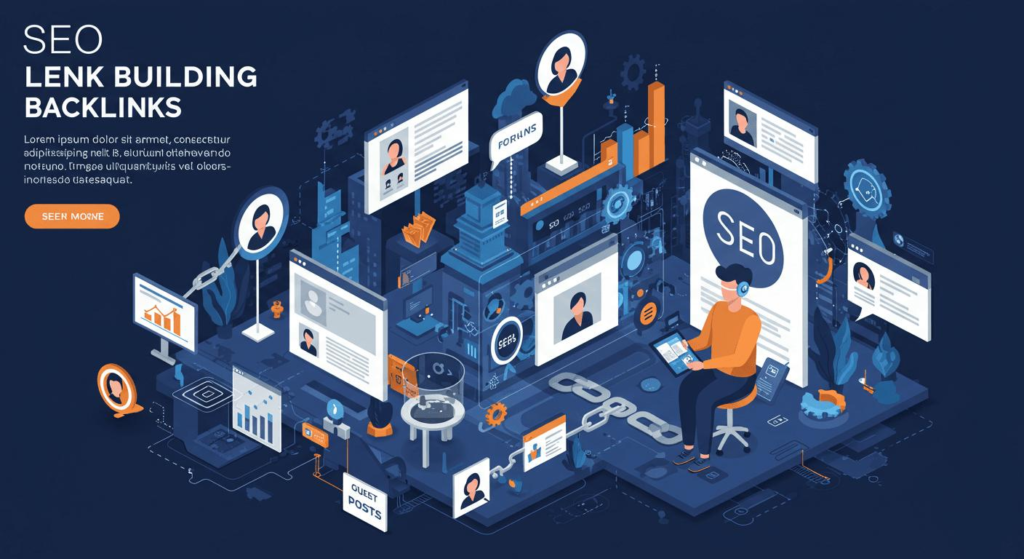
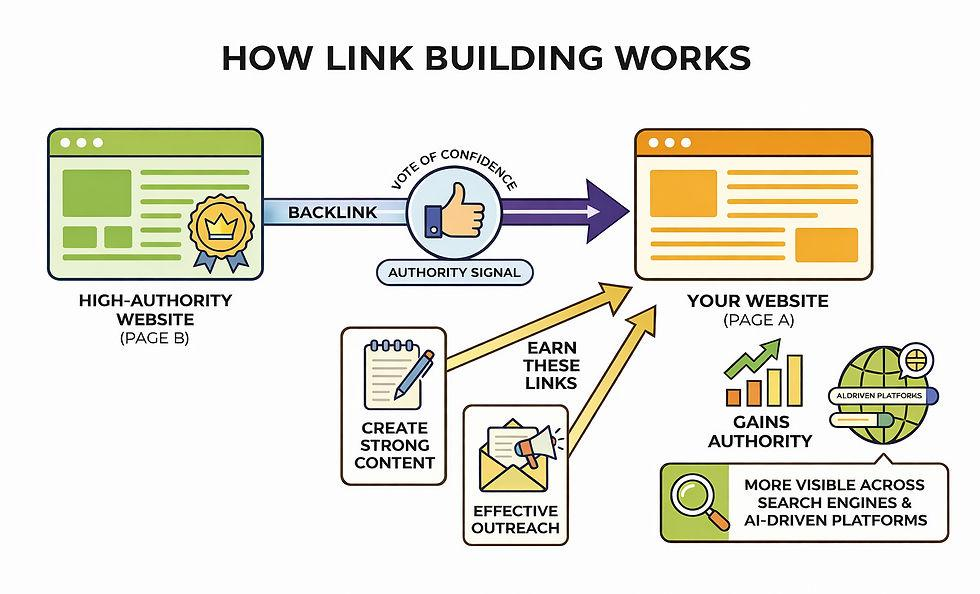
Link building is the process of earning hyperlinks from other websites that point to your website. These links are commonly called backlinks or inbound links.
When a relevant website links to your content, it can introduce new visitors to your business and provide search engines with additional context about your pages. Backlinks can also help search engines discover content that might otherwise take longer to find.
For example, a digital marketing blog may link to a guide published by your SEO agency because the guide explains keyword research in detail. That link can send referral traffic and may contribute to how search engines assess the linked page.
Common link-building methods include:
- Guest posting on relevant websites.
- Publishing original research, statistics, or useful guides.
- Digital PR and media mentions.
- Creating shareable resources and tools.
- Building relationships with industry publications.
- Earning links through partnerships and genuine community involvement.
A successful link building and SEO strategy prioritises relevance, editorial quality, and genuine value rather than simply collecting as many links as possible.
What Is SEO and Why Does It Matter?
Search engine optimisation (SEO) is the process of improving a website so that it can be discovered more easily and perform better in organic search results. It includes technical improvements, content optimisation, keyword targeting, user experience, and off-page authority.
SEO typically involves several key areas.
1. On-page SEO
On-page SEO helps search engines and visitors understand what each page is about. It includes:
- Using relevant keywords naturally.
- Writing clear title tags and meta descriptions.
- Creating informative headings.
- Adding descriptive image alt text.
- Improving internal links.
- Publishing helpful, user-focused content.
2. Technical SEO
Technical SEO focuses on making your website accessible, crawlable, and usable. Important areas include:
- Mobile-friendly design.
- Improving page loading performance.
- Fixing broken links.
- Managing redirects.
- Using HTTPS security.
- Creating XML sitemaps.
- Resolving indexing and canonicalisation issues.
3. Off-page SEO
Off-page SEO includes activities that strengthen your website’s reputation and visibility outside your own website. Link building is an important part of this process, alongside brand mentions, digital PR, and building relationships within your industry.
When link building and SEO are planned together, these three areas can support one another and create a more complete organic search strategy.
How Link Building and SEO Work Together
Link building and SEO are connected because search engines evaluate many signals when deciding which pages to display for particular queries. Backlinks can provide useful signals about reputation and authority, while content and technical SEO help establish relevance and usability.
Here is how the relationship works.
1. Backlinks can strengthen website authority
Links from trustworthy, relevant websites can help establish your site’s credibility. A backlink from an established publication within your industry may be more meaningful than dozens of links from unrelated or low-quality sites.
Strong link building and SEO practices focus on earning links that make sense for the content and audience. For instance, a roofing company receiving a link from a home improvement publication may benefit more from that relevant connection than from a random website.
Authority is not a simple score that guarantees rankings, but quality backlinks can contribute to the overall signals search engines use to assess pages.
2. Links help search engines discover content
Search engine crawlers follow links to discover webpages and understand how pages are connected. External backlinks can lead crawlers to your content, while internal links help them navigate the structure of your own website.
A well-organised website with useful backlinks and strong internal linking can make content discovery easier.
This is particularly helpful for:
- Newly published pages.
- Deep pages with few internal links.
- Content on large websites.
- Pages receiving visibility from industry resources.
3. Link building can improve organic visibility
When a webpage earns relevant backlinks and provides genuinely useful information, it may become more competitive in search results. However, links alone do not guarantee improved rankings.
Link building and SEO are most effective when backlinks support pages that already have strong content, search intent alignment, good usability, and technical foundations.
4. Backlinks bring referral traffic
A backlink can generate visitors directly, even if it does not immediately change your search rankings.
If your website is featured in a popular industry blog, readers may click through to explore your services, articles, or products. This referral traffic can help increase brand awareness and potentially generate leads or sales.
5. Links can build brand trust
Being mentioned by respected websites, publications, blogs, or organisations can help your business become more familiar to potential customers.
People may be more comfortable researching or contacting a business that is referenced by relevant, credible sources. That is why link building and SEO should be viewed as long-term brand-building activities, not just ranking tactics.
6. Internal links and backlinks create a stronger website structure
External backlinks and internal links serve different purposes, but both are important in link building and SEO.
- Backlinks: Links from other websites to your website.
- Internal links: Links between pages on your own website.
Internal links help visitors navigate your website and allow search engines to understand the relationship between your content. For example, a general SEO article can link to your local SEO services, guest posting services, and relevant industry pages.
For businesses investing in link building and SEO, a strong internal linking structure helps distribute users and crawlers across important pages rather than leaving valuable content isolated.
BoostRankify resources you can explore:
- SEO Services — comprehensive SEO support for businesses.
- Guest Post Service — content placements and guest posting solutions.
- Guest Post Sites — explore guest post publishing opportunities.
- Free Business Listing Sites — discover listing opportunities for visibility and citations.
Types of Backlinks That Support SEO
Not every backlink has the same value. Understanding link types can help you build a safer and more effective strategy.
Editorial backlinks
Editorial backlinks are naturally placed by publishers because they find your content useful or relevant. These are valuable because they represent genuine editorial decisions.
Examples include links to original studies, detailed guides, industry reports, expert insights, and helpful resources.
Guest post backlinks
Guest posting involves contributing content to another website, usually within your industry or a closely related topic. It can help you reach new audiences, share expertise, and earn relevant backlinks when the publication accepts editorially appropriate links.
Quality matters more than volume. Avoid publishing repetitive, low-value articles across websites created primarily for selling links.
Explore BoostRankify’s guest post service if you want to understand how guest-post outreach can fit into a broader strategy.
Business directory and local citation links
Business listings can help users discover your business and verify important details such as your business name, location, services, and contact information.
These links are especially useful for local businesses when the directories are legitimate, relevant, and well-maintained.
You can explore our resource on free business listing sites to learn about listing opportunities.
Resource page backlinks
Some websites publish curated resource pages that recommend useful tools, guides, services, or organisations. If your content genuinely helps their audience, you may be able to request inclusion.
The best approach is to offer something valuable that improves the resource page, rather than sending generic link requests.
How to Build a Link Building and SEO Strategy
A sustainable strategy should focus on earning relevant links while improving your website’s overall search performance.
Step 1: Identify pages you want to improve
Start by reviewing your existing website and identifying pages that deserve more visibility.
These may include:
- Important service pages.
- High-quality blog articles.
- Product pages.
- Local landing pages.
- Research or resource pages.
Choose pages that offer useful information and have a clear purpose. Avoid building links to weak pages simply because they contain your target keyword.
Step 2: Create link-worthy content
People are more likely to link to content that provides genuine value. Create resources that answer questions, solve problems, or offer insights that other publishers can reference.
Content ideas include:
- Detailed how-to guides.
- Original surveys and statistics.
- Industry research.
- Infographics.
- Expert interviews.
- Free tools and templates.
- Comprehensive educational resources.
Useful content gives your link building and SEO campaign something meaningful to promote.
Step 3: Find relevant websites
Identify websites that publish content related to your industry, audience, or topic.
Evaluate potential link sources using criteria such as:
- Topical relevance.
- Real organic visibility.
- Quality and usefulness of published content.
- Genuine audience engagement.
- Editorial standards.
- Natural outbound linking practices.
Do not rely only on third-party metrics such as Domain Authority (DA) or Domain Rating (DR). These metrics can be useful for comparison, but they are not Google ranking factors.
Step 4: Build genuine relationships
Outreach works better when you approach publishers with a clear reason to connect.
Instead of sending hundreds of identical emails, personalise your outreach. Explain why your resource is relevant, identify the content it could improve, and offer a useful contribution.
Relationship-based link building and SEO can lead to ongoing editorial mentions, partnerships, and new content opportunities.
Step 5: Monitor backlink quality
Track new backlinks, lost links, referring domains, and the pages receiving links.
If you notice unusual backlink patterns, investigate them rather than automatically assuming they will harm your website. Search engines are designed to identify manipulative link patterns, but you should avoid participating in schemes that violate search policies.
Step 6: Measure SEO results
Monitor performance over time using tools such as Google Search Console and analytics platforms.
Measure:
- Organic clicks and impressions.
- Search ranking trends.
- Referring domain growth.
- Referral traffic.
- Leads and conversions.
- Performance of the pages you are promoting.
A link building and SEO campaign should be evaluated by meaningful outcomes—not simply the number of backlinks acquired.
Common Link-Building Mistakes to Avoid
Even when link building and SEO are part of your marketing plan, poor execution can waste time, damage credibility, or expose your site to search-policy risks.
Buying links purely to manipulate rankings
Avoid buying links designed to manipulate search rankings. Paid advertising and sponsorships are legitimate marketing activities, but links that are paid for should be appropriately qualified, such as with rel="sponsored" where applicable.
Prioritising quantity over quality
Hundreds of irrelevant backlinks are not necessarily better than a handful of useful editorial links. Focus on links that make sense for your audience, website, and industry.
Using exact-match anchor text excessively
Anchor text is the clickable text within a link. Repeatedly using the same keyword-rich anchor text unnaturally can look manipulative.
Use natural anchor text that describes the linked page. Examples include your brand name, article title, descriptive phrases, or natural contextual wording.
Ignoring content quality
Link building cannot compensate for poor website content. If users land on pages that are outdated, confusing, slow, or unhelpful, you may struggle to turn visibility into business results.
Forgetting internal linking
Acquiring backlinks to one page without connecting it to related pages can create missed opportunities. Include relevant internal links to service pages, supporting articles, and resources where they genuinely help visitors.
Link Building and SEO for Local Businesses
Local businesses can use link building and SEO to improve their online visibility in specific geographical markets. Local relevance matters when customers are searching for services in their city, area, or neighbourhood.
Potential opportunities include:
- Local news websites and community publications.
- Business associations and chambers of commerce.
- Relevant local directories.
- Community sponsorships.
- Partnerships with complementary businesses.
- Local events and charity activities.
For example, a business targeting customers in Karachi may focus on local publications and relevant organisations while strengthening its website with location-specific content and a clear service structure.
Businesses targeting multiple markets can also develop location-specific strategies through SEO services in Karachi, SEO services in London, or SEO services in Dubai.
Local backlinks should be relevant and earned through real connections—not manufactured through spammy directories or fake partnerships.
How Long Does Link Building Take to Improve SEO?
Link building is a long-term process, and results rarely happen overnight. Search engines need to discover links, evaluate pages, and reassess how content performs among competing search results.
The timeframe depends on several factors, including:
- Your website’s existing authority and history.
- Competition for your target keywords.
- Backlink relevance and quality.
- Content quality and search intent.
- Technical SEO problems.
- Consistency of your overall strategy.
Link building and SEO should be treated as ongoing activities. Instead of expecting instant ranking changes, businesses should consistently publish useful content, earn relevant backlinks, and improve website performance.
How BoostRankify Can Help
BoostRankify helps businesses improve online visibility through SEO strategies, content marketing, link-building opportunities, and targeted digital marketing services.
Whether you’re building a new website or trying to improve an established brand, combining link building and SEO with a broader optimisation strategy can help create sustainable growth.
Explore BoostRankify SEO services to learn more about improving organic visibility, or visit our guest post sites resource to explore publishing opportunities.
For a strategy tailored to your website, contact BoostRankify.
Frequently Asked Questions (FAQs)
1. What is the relationship between link building and SEO?
Link building is an off-page SEO strategy that helps websites earn backlinks from other websites. SEO includes content, technical optimisation, user experience, and authority-building. Link building and SEO work together to improve discoverability, credibility, and organic search performance.
2. Do backlinks still matter for SEO?
Yes, backlinks remain an important factor in how search engines evaluate webpages, but their value depends on context, relevance, and quality. Natural links from useful, credible websites are generally more beneficial than spammy or manipulative links.
3. How many backlinks do I need to rank on Google?
There is no fixed number of backlinks required to rank. A page may rank with fewer backlinks if its content is relevant and helpful, while highly competitive queries may require stronger authority, content quality, and overall SEO.
4. Can link building improve website traffic?
Yes. Backlinks may improve organic visibility over time and can also generate referral traffic directly from websites linking to you. The traffic you receive depends on the publisher’s audience, placement, relevance, and the usefulness of your destination page.
5. Are guest posts good for link building and SEO?
Guest posts can support brand awareness, referral traffic, and relevant link acquisition when they are published on genuine websites with useful content and real audiences. Guest posting primarily for keyword-rich backlinks at scale can violate search spam policies.
6. What is the difference between internal links and backlinks?
Internal links connect pages within the same website. Backlinks come from other websites and point to your website. Both help users navigate content, while search engines use links to discover pages and understand relationships.
7. How can beginners start link building?
Beginners can start by creating useful content, finding relevant websites in their industry, contributing meaningful guest articles, building relationships with publishers, and identifying legitimate directories or community resources. Focus on quality, relevance, and consistency.
8. Can bad backlinks hurt my website?
Manipulative link schemes can create SEO risks. However, having some low-quality links pointing to your website does not automatically mean you will receive a penalty. Avoid buying manipulative links, participating in link schemes, or creating spam backlinks.
Conclusion
Link building and SEO are most effective when treated as complementary parts of a long-term digital marketing strategy. SEO helps your website deliver relevant, accessible, and useful content, while link building can strengthen its reputation, help users discover your brand, and support organic visibility.
Instead of chasing backlink numbers, focus on earning links from relevant sources, creating genuinely valuable content, maintaining a healthy internal linking structure, and tracking meaningful results.
When link building and SEO work together consistently, businesses can build stronger digital authority, attract qualified visitors, improve brand trust, and create a more sustainable foundation for online growth.